

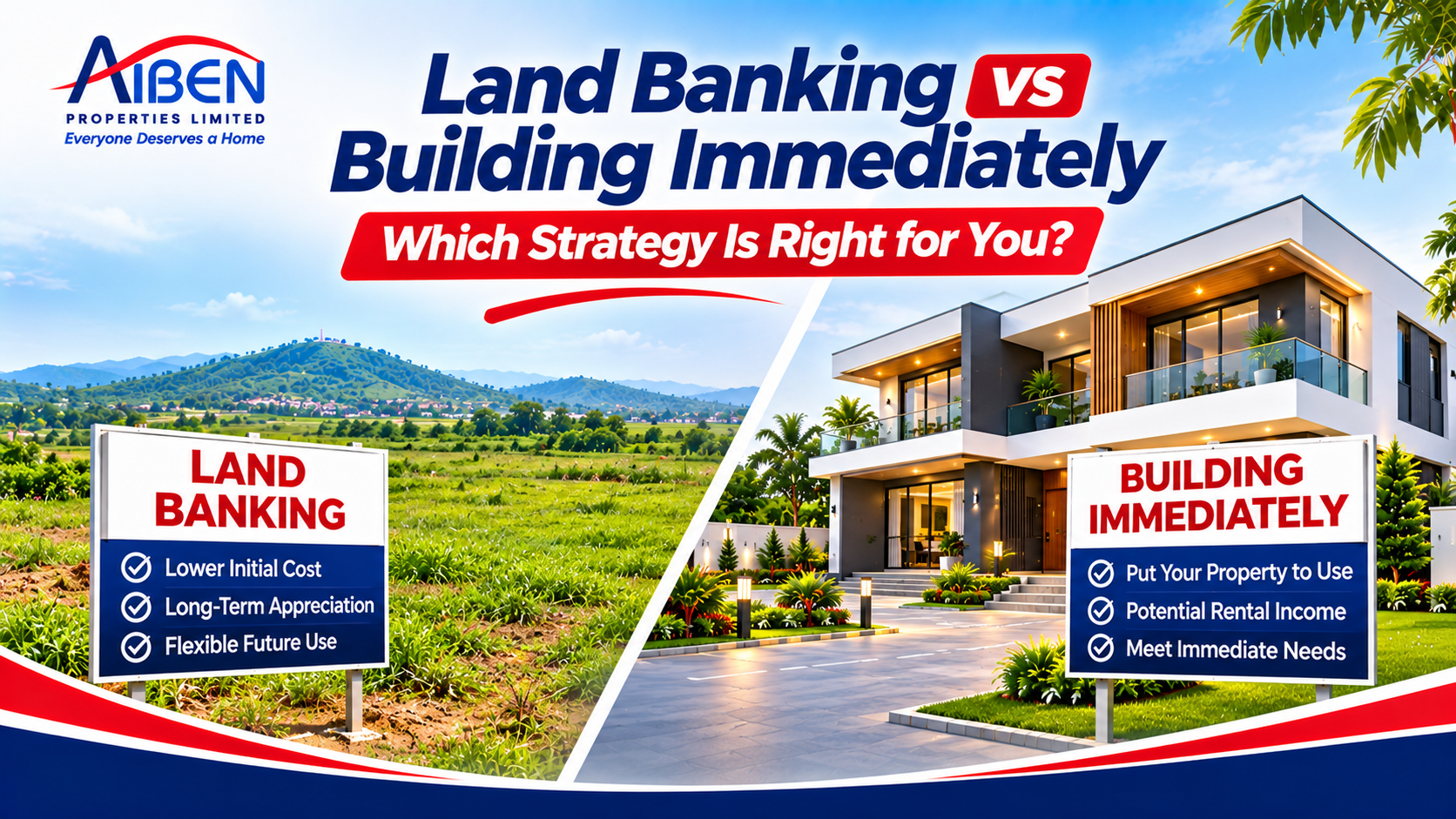
Land Banking vs Building Immediately: Which Strategy Fits Your Goals?
One of the biggest decisions people face after acquiring land is whether to hold it for the future or begin construction immediately. For some buyers, purchasing land and allowing it to appreciate over time is an attractive way to participate in the real estate market. For others, the priority is to develop the property, build a home, generate rental income or establish a business without waiting several years.
Both approaches can form part of a sound property strategy, but they serve different financial objectives. Land banking focuses primarily on holding land for potential long-term value appreciation, while building immediately involves committing additional capital to turn the land into a usable property or income-generating asset.
In Abuja, where residential communities and property developments continue to evolve, choosing between these strategies requires more than simply comparing the cost of land with the cost of construction. Buyers must consider their financial capacity, investment timeframe, location, infrastructure, development requirements and long-term objectives.
So, should you buy land and hold it, or should you build immediately?
This guide explores the differences between land banking and immediate construction, the advantages and risks of each strategy, and how to determine which approach best fits your goals.
What Is Land Banking?
Land banking is a real estate investment strategy that involves acquiring land and holding it for a period of time with the expectation that its market value may increase as the surrounding location develops.
Instead of immediately constructing a building, the investor secures the land and retains ownership while monitoring changes in the surrounding environment. These changes may include road development, infrastructure improvements, population growth, commercial activities and increasing demand for property.
For example, an investor may purchase a plot in an emerging area of Abuja because they believe the location has long-term development potential. Rather than building immediately, they hold the property while the area develops and may decide to sell, build or use the land for another purpose in the future.
However, land banking is not a guaranteed way to make money. Property values do not automatically increase simply because land is held for several years. The success of the strategy depends on factors such as location, documentation, accessibility, planning conditions, market demand and the investor’s purchase price.
Land banking is therefore more suitable for people who can afford to commit capital for an extended period without depending on immediate rental income from the property.
What Does Building Immediately Mean?
Building immediately involves acquiring suitable land and proceeding with development within a relatively short period after completing the necessary planning, documentation and approvals.
Rather than holding the land undeveloped, the owner commits additional resources to transform it into a residential, commercial or other permitted property.
For a homeowner, this may involve constructing a house for personal occupation. For an investor, it could mean developing rental apartments, commercial spaces or another property designed to generate income.
Building immediately can allow an owner to put the property to practical use rather than waiting for possible appreciation in the value of undeveloped land.
However, construction involves several financial and administrative responsibilities. The owner must consider architectural designs, engineering services, building approvals, construction materials, labour, project supervision, utilities, finishing and other expenses.
The decision to build should therefore be supported by a realistic construction budget and a clear understanding of what the completed property is expected to achieve.
Land Banking vs Building Immediately: Understanding the Key Differences
Although both strategies begin with property ownership, their financial commitments, timelines and potential benefits are different.
| Consideration | Land Banking | Building Immediately |
|---|---|---|
| Main objective | Hold land for potential appreciation | Develop a usable property |
| Initial capital | Land acquisition and related costs | Land plus construction and development costs |
| Income generation | Usually no direct rental income | Possible rental or business income after completion |
| Time commitment | Often long term | Depends on construction and approvals |
| Management | Ownership records, site monitoring and obligations | Construction supervision and property management |
| Flexibility | Build or sell later, subject to conditions | Property use is more defined by the development |
| Main risks | Market uncertainty, holding costs and liquidity | Cost overruns, delays and construction risks |
| Suitable for | Patient investors with a long-term horizon | Buyers ready to develop and use the property |
Neither strategy is automatically better. The right option depends on what you want the property to accomplish and whether your finances can support that decision.
5 Advantages of Land Banking
Land banking can be attractive to investors who want to secure property today while postponing construction until a later date.
1. You Can Enter the Property Market Without Building Immediately
One of the major attractions of land banking is that it allows buyers to acquire land without immediately taking on the financial responsibility of constructing a building.
For individuals who are not yet ready to build, purchasing land can be a way to begin their property ownership journey while working towards their longer-term financial goals.
However, buyers should remember that the purchase price is only the beginning of their financial commitment. Documentation, applicable charges, estate obligations and future development expenses must also be considered.
2. Potential for Long-Term Capital Appreciation
Land banking is often associated with the possibility of capital appreciation. If an area becomes more desirable because of improved infrastructure, population growth, commercial activity or increased demand, the value of land may increase.
For example, a location that initially has limited development may attract new residential projects, businesses and supporting services over time.
However, appreciation is never guaranteed. An investor should investigate actual development activity and demand rather than relying solely on predictions about what an area may become.
3. Flexibility to Develop in the Future
Buying land today does not necessarily mean you must build immediately.
You may decide to construct a family home when your circumstances change, develop rental apartments when you have sufficient capital or sell the property if doing so becomes more appropriate for your financial objectives.
This flexibility can be useful for buyers who have a clear long-term plan but are not yet ready to commence construction.
It is important, however, to understand the property’s permitted use, development conditions and any timelines or obligations contained in the purchase agreement or applicable estate rules.
4. Opportunity to Plan Your Construction Finances
Holding land can give an owner additional time to prepare financially for construction.
Instead of committing to land acquisition and building expenses at the same time, the buyer can establish a separate savings plan for architectural services, materials, labour, approvals and finishing.
This approach may help reduce financial pressure, particularly for individuals who intend to build their homes gradually.
Nevertheless, construction costs may change during the holding period. A future building budget should be reviewed regularly rather than based entirely on current prices.
5. A Potential Long-Term Asset for Family Planning
Some people acquire land with the intention of building a home in the future or securing property for their children and family members.
Land banking may support this objective by allowing the owner to secure a property before they are ready to develop it.
For this strategy to work effectively, the buyer must maintain proper ownership records, understand the applicable property conditions and ensure that the land remains properly identified and protected.
5 Advantages of Building Immediately
While land banking focuses on holding property, building immediately allows an owner to move from land ownership to practical property development.
1. You Can Put Your Property to Use
One of the clearest advantages of construction is that the land becomes a developed asset that can serve a specific purpose.
A completed residential building can provide accommodation for the owner and family. A suitable commercial property may accommodate a business, while rental apartments may provide an opportunity to earn rental income.
The advantage is not simply that a building exists. It is that the owner has developed the land to meet a particular need.
2. Opportunity to Generate Rental Income
For investors, constructing rental apartments or other suitable income-producing properties may create an opportunity to earn recurring income after completion and occupancy.
The potential income depends on factors such as location, property type, rental demand, construction cost, maintenance and management expenses.
Investors should calculate expected rental income against the total development cost rather than assuming that every completed building will automatically be profitable.
3. Greater Control Over Property Design
Building gives the owner greater control over the design, layout, materials, facilities and finishing of the property.
For example, a family may want a particular number of bedrooms, a home office, a private garden, parking spaces or additional storage areas.
An investor developing rental apartments may instead prioritise the needs of the intended tenants and the practical use of available space.
This flexibility can help ensure that the completed property meets the owner’s actual requirements.
4. You May Avoid Delaying an Important Personal Goal
Some people purchase land with the intention of building their homes but continue postponing construction for several years.
During that period, their family circumstances, housing needs and financial priorities may change. Beginning construction when financially and practically ready can help turn the goal of homeownership into reality.
For someone currently paying rent, building a suitable home may also provide an alternative to continuing to rent, although the total construction cost and time required must be carefully evaluated.
5. The Property Can Serve a Defined Investment Purpose
Construction allows an investor to develop a property around a specific market opportunity.
Depending on planning approvals and demand, this may include residential accommodation, offices, retail spaces, warehouses or other permitted property uses.
The important consideration is whether the completed property has a realistic market and whether the expected benefits justify the development cost.
The Financial Reality: What Does Each Strategy Really Cost?
One of the biggest mistakes property buyers make is comparing the purchase price of land with the cost of a completed building without considering all the expenses involved.
Land banking requires more than paying for a plot and leaving it untouched. Building immediately requires considerably more financial planning because construction introduces several additional cost categories.
Costs Associated with Land Banking
Before purchasing land for long-term holding, consider:
- Land purchase price.
- Legal fees and documentation expenses.
- Survey and verification costs.
- Applicable statutory charges and registration expenses.
- Estate maintenance or other agreed obligations.
- Site inspection and security arrangements.
- Future construction savings.
Even when the land remains undeveloped, the owner may still have financial and administrative responsibilities.
Costs Associated with Building Immediately
A construction project may require:
- Land acquisition, if the owner does not already own suitable land.
- Architectural and engineering fees.
- Survey and soil investigation.
- Planning and building approvals.
- Foundation and structural construction.
- Roofing, electrical and plumbing installations.
- Windows, doors and finishing materials.
- Labour and contractor payments.
- Utility connections and external works.
- Project supervision and contingency funds.
The total cost will depend on the size, design, location, building specifications, materials and construction timeline.
A responsible buyer should obtain professional cost estimates before starting construction. It is also advisable to maintain a contingency allowance because unexpected expenses and price changes can affect the original budget.
Which Strategy Is Better During Rising Construction Costs?
Construction costs are an important consideration when deciding whether to build immediately or hold land for the future.
Some buyers choose land banking because they want to postpone construction until they have accumulated sufficient funds. However, waiting does not necessarily make construction cheaper.
Building materials, labour, transportation, professional services and other project expenses may change over time. A construction budget prepared today may not reflect what the same project will cost several years later.
On the other hand, rushing into construction without sufficient funding can create serious financial difficulties. An unfinished building may remain incomplete for an extended period, while the owner continues to manage the financial commitments associated with the project.
The better approach is to assess your current financial capacity, obtain realistic construction estimates and determine whether you can complete the project without putting unnecessary pressure on your finances.
If you are ready and properly funded, building may make sense. If you are not ready, acquiring suitable land and developing a disciplined construction savings plan may be more practical.
Land Banking vs Building Immediately: Which Strategy Fits Your Goals?
The best strategy becomes clearer when you examine what you actually want to achieve.
Choose Land Banking If Your Goal Is Long-Term Property Ownership
Land banking may suit you if you want to acquire property now but are not financially or personally ready to build.
It may also appeal to investors who have a longer investment horizon and can afford to hold property without relying on immediate income.
Before choosing this route, ensure that the land is properly documented, the location has been carefully assessed and you understand the obligations attached to ownership.
Build Immediately If You Need a Home
If your main objective is to provide accommodation for yourself or your family, building may be the more practical option when you already own suitable land and have sufficient funds.
You should have a realistic design, a clear construction budget, appropriate professional support and the required approvals before commencing work.
Building is particularly relevant when your housing needs are immediate and waiting several years would not support your personal circumstances.
Build Immediately If You Want to Develop an Income-Producing Property
Investors interested in rental income or commercial property may prefer development over holding undeveloped land.
However, the decision should be supported by research into the intended market, expected rental demand, construction expenses, operating costs and potential income.
A building that is expensive to construct but difficult to rent or operate may not achieve the investor’s objectives.
Consider a Combination of Both Strategies
You do not always have to choose only one approach.
Some property owners acquire land for long-term holding while developing another property that meets their immediate needs. Others build on one plot and retain additional land for future development.
This approach may provide diversification, but it also requires sufficient capital and careful financial management.
The important thing is to avoid purchasing more property than you can responsibly maintain.
The Risks You Should Understand Before Making a Decision
Both land banking and immediate construction involve risks. Understanding these risks before committing your money can help you make a more informed decision.
Risks of Land Banking
1. No Guaranteed Appreciation: Land values can remain unchanged or decline depending on market conditions, infrastructure, demand and other factors.
2. Limited Liquidity: Selling land may take time, particularly if demand is weak or the asking price is unrealistic.
3. Ownership and Documentation Problems: Poor verification, incomplete documentation or ownership disputes can affect the security and marketability of the property.
4. Holding Costs: Estate obligations, applicable charges, security arrangements and other ownership-related expenses may continue even when the property is not being developed.
5. Delayed Development: Infrastructure and surrounding development may take longer than expected or may not happen as originally anticipated.
Risks of Building Immediately
1. Construction Cost Overruns: Materials, labour and other expenses may exceed the original budget.
2. Project Delays: Weather, funding difficulties, contractor performance, approvals and material availability can affect construction timelines.
3. Poor Contractor Management: Inadequate supervision and weak project management can result in poor workmanship, waste and additional expenses.
4. Market Risk: A completed property may not attract the expected rental demand or selling price.
5. Financial Pressure: Beginning construction without adequate funding can leave a project unfinished and create additional financial obligations.
In either case, due diligence, professional advice and realistic financial planning remain essential.
A Practical Checklist Before Choosing Your Strategy
Before deciding whether to hold land or build immediately, ask yourself the following questions:
- What is my main objective: personal accommodation, rental income, resale or long-term ownership?
- Do I already own suitable land?
- How much money can I comfortably commit without affecting my other financial responsibilities?
- Can I afford the full construction project, including finishing and unexpected expenses?
- Is the property located in an area with suitable accessibility and infrastructure?
- Have I verified the ownership documents and permitted land use?
- Am I prepared to hold the land without immediate income?
- What are the development conditions and obligations attached to the property?
- What is my intended timeline for selling, building or occupying the property?
- What happens if construction costs increase or the surrounding area develops more slowly than expected?
Your answers will help you identify the strategy that best matches your financial position and long-term objectives.
Why Location and Documentation Matter in Both Strategies
Whether you intend to hold land for ten years or begin construction immediately, the quality of the property decision begins with the land itself.
A location should be assessed based on accessibility, surrounding development, permitted use, infrastructure and the needs of the intended buyer or eventual occupant.
Documentation is equally important. Buyers should investigate ownership, survey information, approved layout, applicable planning conditions and the relevant transaction documents before committing funds.
For property within Abuja, buyers should also understand the applicable land administration and development approval processes.
Read our related guide: How to Verify a Real Estate Developer in Abuja Before You Buy Property.
You may also find our article on Buying Land in Abuja and Building Years Later: A Landowner’s Planning Checklist useful if you are considering a long-term land ownership strategy.
Explore Property Opportunities with AIBEN Properties
At AIBEN PROPERTIES LIMITED, we understand that property ownership means different things to different people. Some buyers want to secure land for the future, while others are ready to develop a home, establish a business or explore a longer-term investment opportunity.
Our property portfolio includes residential, commercial, industrial and lifestyle development opportunities across Abuja. This provides prospective buyers with different property concepts to explore according to their objectives.
Whether you are considering land acquisition, residential development or another property opportunity, it is important to understand the specific project, available options, documentation, development conditions and applicable purchase terms.
We encourage buyers to ask questions, examine the relevant documents and make decisions based on their financial position and intended use of the property.
Explore our property investment opportunities or visit the AIBEN PROPERTIES LIMITED website to learn more about our developments.
Frequently Asked Questions About Land Banking and Building Immediately
What is the difference between land banking and property development?
Land banking involves acquiring and holding land for potential future appreciation or development. Property development involves improving the land through construction or other approved activities to create a usable or income-producing asset.
Is land banking a good investment in Abuja?
Land banking may suit investors with a long-term investment horizon, but it does not guarantee profit. Buyers should assess the location, documentation, accessibility, development activity, holding costs and potential market demand before purchasing.
Should I buy land now and build later?
Buying land now and building later may be suitable if you want to secure a property before you are financially ready to construct. However, you should understand the ownership conditions, development obligations, infrastructure status and future construction costs.
Is it better to build a house immediately or wait?
The decision depends on your financial capacity, housing needs and construction readiness. Building immediately may be appropriate if you have suitable land, sufficient funds and a clear plan. Waiting may be more practical if you need additional time to save and prepare.
Does land banking generate rental income?
Undeveloped land generally does not produce rental income in the same way as a completed rental property. Its potential financial benefit usually depends on future sale, development or another permitted use.
Can land appreciate without development?
Yes, land may increase in value due to changes in demand, accessibility, infrastructure and surrounding development. However, appreciation is not guaranteed, and land can also remain stagnant or lose value.
What should I check before buying land for land banking?
You should verify ownership and title documentation, survey information, approved land use, development conditions, accessibility, infrastructure commitments, purchase terms and any recurring obligations. A qualified property lawyer should review the relevant documents before you complete the transaction.
Can I buy land and build gradually?
Yes. Some property owners develop their land in stages as funds become available. However, construction should follow an appropriate professional plan, approved designs and applicable regulations. Building gradually does not remove the need for a realistic overall budget.
Conclusion: The Best Property Strategy Is the One That Fits Your Goals
Land banking and building immediately are two different approaches to property ownership, and neither is universally better.
Land banking may suit buyers who want to secure property for the future, have the patience to hold it and can manage the responsibilities associated with long-term ownership. Building immediately may be more appropriate for those who need a home, want to put their land to practical use or have a clear plan for developing an income-producing property.
The most important consideration is to understand what you want your property to achieve before committing your money. Evaluate your finances, examine the location, verify the documentation and prepare for the costs and responsibilities that come with your chosen strategy.
At AIBEN PROPERTIES LIMITED, we believe that every property decision should begin with informed planning and a clear understanding of the buyer’s objectives.
Whether you are securing land for tomorrow or building the property you need today, make a decision that supports your long-term vision.
AIBEN PROPERTIES LIMITED — Everyone Deserves a Home.