

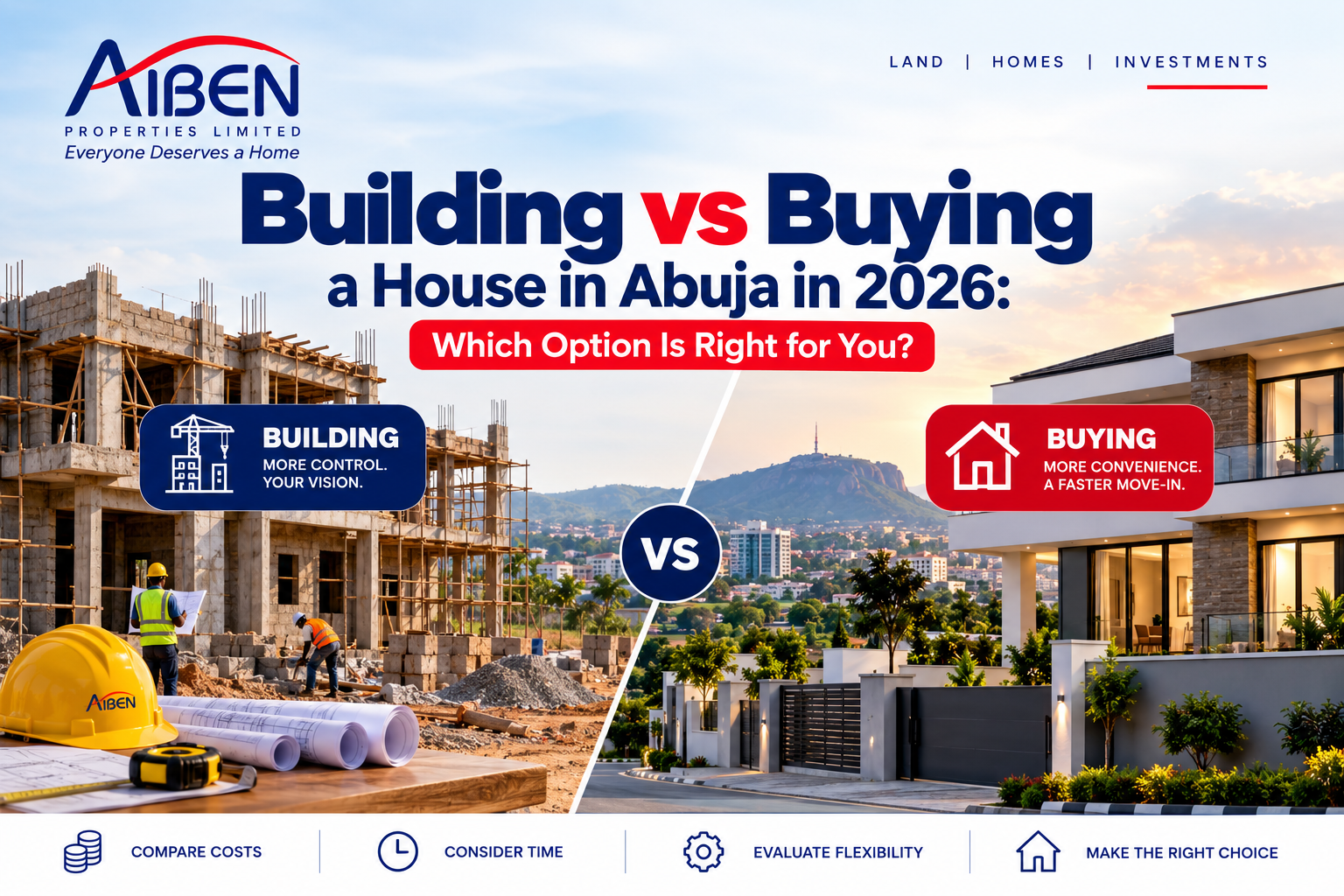
Building vs Buying a House in Abuja in 2026: Which Option Is Right for You?
For many people planning to own property in Abuja, one of the biggest decisions is whether to build a house from scratch or buy an already completed property. Both options can lead to homeownership, but they involve very different financial commitments, timelines, responsibilities and levels of flexibility.
Building gives you greater control over the design, materials and development process. Buying, on the other hand, can provide a more straightforward route to owning a home, particularly when the property is already completed and ready for occupation.
There is no single answer that applies to every buyer. The better option depends on your budget, preferred location, timeframe, lifestyle requirements and willingness to manage a construction project. This guide compares both approaches to help prospective homeowners make a more informed decision.
What Does Building a House in Abuja Involve?
Building a house usually starts with acquiring suitable land and completing the necessary documentation and approvals before construction begins.
The process can involve architects, engineers, quantity surveyors, contractors, artisans, suppliers and other professionals. From the foundation through to roofing, finishing and installation of utilities, the owner is generally responsible for coordinating or funding the different stages of development.
Building can provide significant flexibility because the homeowner has an opportunity to influence the property’s design, layout, materials and finishing.
However, that flexibility also comes with responsibility. Construction requires planning, supervision and financial discipline, particularly when unexpected expenses or changes arise during the project.
What Does Buying a House in Abuja Involve?
Buying a house involves acquiring an existing or newly developed property from a developer, property owner or other legitimate seller.
Depending on the property, the buyer may be able to move into the house relatively quickly after completing the transaction and meeting the relevant requirements.
The major advantage is convenience. Instead of managing construction from the ground up, the buyer is purchasing a property that has already gone through much of the development process.
However, buyers have less control over the property’s original design and may need to accept the location, architecture, layout and finishing provided by the developer or previous owner.
Building vs Buying: The Major Differences
The decision becomes easier when the two options are compared across the factors that matter most to a prospective homeowner.
1. Cost
Cost is often the first consideration.
When building, the overall expenditure can include land acquisition, documentation, professional fees, approvals, construction materials, labour, infrastructure, finishing, security and other associated expenses.
Buying a completed house provides a clearer purchase price from the beginning, although buyers should still account for legal, documentation, inspection, moving, furnishing and other transaction-related expenses.
Neither option should automatically be assumed to be cheaper. The final cost depends on the location, property type, specifications, land situation, construction quality and other factors.
The right comparison is therefore the total cost of achieving the home you actually want, rather than simply comparing the price of land with the advertised price of a completed house.
2. Control Over Design
Building gives you significantly more control.
You can work with professionals to determine the number of bedrooms, floor plan, room sizes, outdoor areas, parking requirements, finishes and other features.
This can be particularly valuable if you have specific lifestyle requirements that are difficult to find in existing properties.
When buying a completed house, your options are generally limited to what is already available. Renovation can change some aspects of a property, but major structural changes can be expensive and may require additional approvals.
3. Time
Building a house generally takes longer than purchasing a completed property.
Construction involves several stages, and delays can occur because of weather, material availability, labour, financing, approvals or changes to the project.
Buying a completed property can significantly shorten the journey to homeownership because much of the development work has already been completed.
For someone who needs a home within a relatively short period, the availability of completed properties may therefore be an important consideration.
4. Construction Management
Building requires active involvement.
Even when a homeowner hires a contractor, there are still decisions to make about materials, design changes, payments, inspections and project progress.
Poor supervision can also lead to quality issues, delays or additional costs.
Buying a completed property removes much of this construction-management burden. The buyer can focus more on inspection, documentation, transaction completion and preparing the property for occupation.
For buyers who have demanding professional or business schedules, this difference can be significant.
5. Location
Location is important in both scenarios.
When building, you first need to find and acquire land in a location that meets your requirements. The available land, surrounding infrastructure, accessibility and development pattern can influence your decision.
When buying a house, you can search for completed properties in established or developing areas and compare the options available.
In either case, the location should be evaluated beyond the immediate property. Consider road access, transportation, infrastructure, surrounding development, proximity to essential services and your long-term plans.
6. Customisation
If having a home designed specifically around your lifestyle is a priority, building offers greater flexibility.
A homeowner can plan spaces around their family size, work requirements, entertainment needs, parking requirements and preferred architectural style.
Buying can still provide choices, particularly when purchasing from a developer with different house types or layouts. However, the degree of customisation is generally more limited than with a property designed and constructed specifically for you.
7. Predictability of Expenses
One of the challenges of construction is that the final cost can change during the project.
Material prices, labour costs, design modifications, unforeseen site conditions and other factors can affect the construction budget.
A completed property often provides greater price certainty because the buyer knows the asking or agreed purchase price before completing the transaction.
That does not eliminate additional expenses, but it can make financial planning more straightforward.
8. Maintenance and Repairs
A newly completed house can offer the benefit of modern construction and installations, although maintenance will still be required.
When buying an existing property, the condition of the building becomes particularly important. Buyers should inspect the property carefully and, where appropriate, engage qualified professionals to identify structural, electrical, plumbing or other issues.
A property that appears attractive during a brief viewing may require significant expenditure after purchase if important defects are overlooked.
This is why professional inspection and due diligence are important regardless of whether you build or buy.
Building a House May Be Suitable If…
Building may make sense for buyers who:
- Want a customised home
- Have specific architectural requirements
- Are willing to manage a longer project
- Want greater control over materials and finishing
- Have access to suitable land
- Can accommodate construction-related uncertainty
- Prefer to develop their property gradually
However, buyers should enter the process with a realistic construction budget and contingency plan.
Buying a House May Be Suitable If…
Buying may be more appropriate for people who:
- Want a faster route to homeownership
- Prefer greater cost predictability
- Do not want to manage construction
- Have found a suitable completed property
- Need a home within a shorter timeframe
- Prefer an established development
- Want to reduce the responsibilities associated with construction
Again, the property should be inspected and properly verified before the transaction is completed.
What About Buying Land and Building Later?
There is also a middle-ground approach.
Some buyers acquire land first and build when their finances and circumstances allow. This can be useful for people who want to secure land while postponing construction until a later stage.
However, buying land is not the same as completing a home. The buyer must eventually account for construction, professional services, approvals, infrastructure, finishing and other costs.
If you are considering this approach, think beyond the initial land purchase and develop a realistic long-term plan for the entire project.
Building vs Buying for Investment
The decision can also change when the property is being acquired primarily as an investment.
An investor may focus on factors such as rental demand, location, development activity, property type, potential operating costs and the expected holding period.
Building can provide an opportunity to design a property around a particular market, such as rental apartments or family homes. Buying an existing property can provide a quicker route to putting the property into use.
Neither strategy automatically guarantees a particular return. Investors should conduct proper market research and assess the numbers based on the specific property and location.
What Should First-Time Homebuyers Consider?
First-time buyers should avoid making the decision based solely on emotion or the appearance of a property.
Start by establishing your actual budget and identifying what you need from the property.
If building, determine whether you have access to suitable land and whether you can manage the construction process.
If buying, determine whether the available properties meet your requirements without creating an unsustainable financial commitment.
Documentation, location, infrastructure and long-term affordability should remain central to the decision.
A Simple Decision Framework
Ask yourself these questions before choosing:
Do I already own suitable land?
If yes, building may deserve serious consideration. If not, you need to include land acquisition in your construction plan.
Do I need the property quickly?
If time is a major priority, a completed property may offer a more direct route.
How much customisation do I need?
If you have very specific design requirements, building may provide greater flexibility.
Do I want to manage a construction project?
If the answer is no, buying a completed property may reduce the responsibilities involved.
Can I handle unexpected construction expenses?
A construction budget should include a reasonable contingency rather than assuming that every expense will match the original estimate.
What does the location offer?
Whether building or buying, investigate accessibility, infrastructure, surrounding development and the property’s suitability for your long-term plans.
Buying From a Property Developer
Another option is purchasing a newly developed property directly from a property developer.
This can combine some advantages of both approaches. You may not have to manage construction yourself, while still gaining access to a newly planned development and different property options.
When considering a developer, buyers should investigate the company’s track record, verify the property’s documentation, understand the development plan and carefully review the purchase agreement.
The fact that a property is newly developed does not remove the need for due diligence.
How AIBEN Properties Can Help
AIBEN Properties offers a range of property opportunities across its portfolio, including residential and master-planned developments.
For buyers who prefer purchasing within a planned development rather than managing construction independently, exploring available AIBEN properties can provide another route to property ownership.
Prospective buyers should consider the location, property type, development status, documentation, payment arrangements and their own financial circumstances before making a decision.
Those who prefer to build independently can also use the principles discussed in this guide when evaluating land and planning their construction project.
Common Mistakes to Avoid
One common mistake is comparing only the purchase price of a completed house with the cost of land.
The real comparison should include the full cost of construction and all associated expenses.
Another mistake is underestimating the time and management required to build. Construction is a project that requires proper planning and professional involvement.
For buyers purchasing completed property, a common mistake is failing to inspect the building or verify its documentation before making payment.
In both cases, rushing the decision can create unnecessary financial and legal problems.
So, Should You Build or Buy a House in Abuja?
The answer depends on what you value most.
Building can provide greater control, customisation and flexibility, but it requires more planning, time and project management.
Buying can provide greater convenience, a shorter path to ownership and more predictable upfront costs, but you have less control over the property’s original design and specifications.
The most suitable option is the one that aligns with your financial capacity, timeframe, lifestyle requirements and long-term property objectives.
Final Thoughts
Building and buying are both legitimate paths to homeownership in Abuja, but they require different approaches.
If you choose to build, plan carefully, work with qualified professionals and maintain a realistic budget. If you choose to buy, inspect the property, verify the documentation and understand all the costs and contractual obligations before completing the transaction.
Most importantly, do not allow the excitement of owning a home to replace proper financial planning and due diligence.
Whether you build from the ground up or purchase a completed property, the ultimate goal should be the same: to own a property that suits your needs and remains financially sustainable over the long term.
Frequently Asked Questions
Is it cheaper to build or buy a house in Abuja?
There is no universal answer. The total cost depends on land, location, construction specifications, materials, labour, professional fees, infrastructure and the price of the completed property being compared.
How long does it take to build a house in Abuja?
Construction timelines vary depending on the type and size of the property, design, approvals, funding, contractor, materials and other project conditions. Buyers should establish a realistic timeline with qualified professionals before construction begins.
Is buying a completed house easier than building one?
Generally, buying a completed property involves fewer construction-management responsibilities. However, buyers still need to conduct property inspections, verify documentation and understand the transaction terms before purchasing.
Can I buy land now and build later?
Yes. Some buyers acquire land first and develop it later. However, they should consider documentation, infrastructure, planning requirements and the future cost of construction before purchasing.
What should I check before buying a house in Abuja?
Buyers should consider the property’s documentation, location, physical condition, accessibility, infrastructure, ownership status, transaction terms and any additional costs associated with the purchase.