

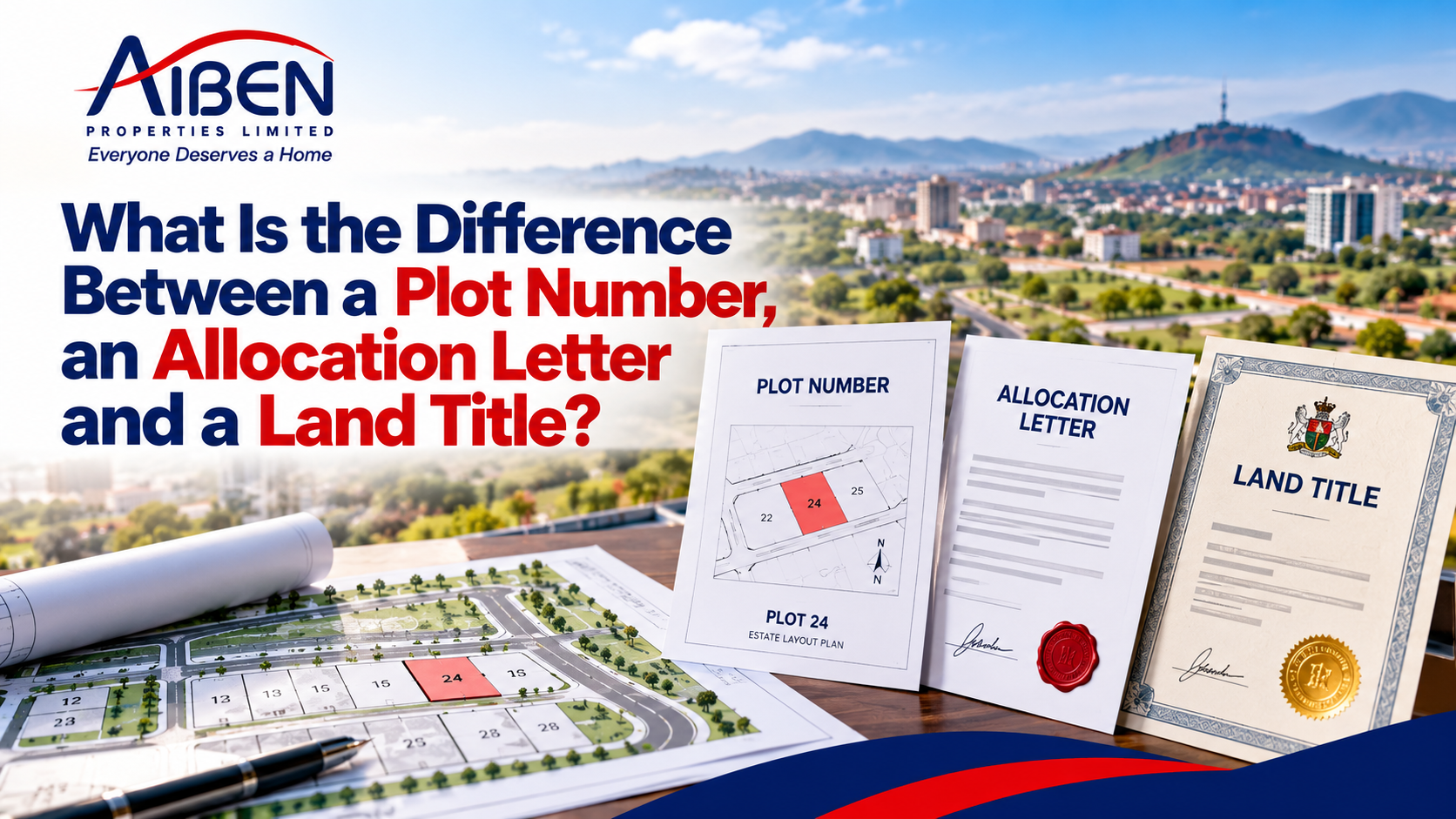
What Is the Difference Between a Plot Number, an Allocation Letter and a Land Title?
Buying land in Abuja is an important financial decision, but understanding the documents associated with a property can be just as important as choosing the right location. During a land purchase, buyers may receive a plot number, an allocation letter, a survey plan or other documents from a property developer. Although these documents may all relate to the same piece of land, they do not serve the same purpose.
One common mistake is assuming that a plot number or allocation letter automatically proves legal ownership. In reality, each document provides different information, and the strength of a buyer’s claim depends on the underlying ownership, the nature of the transaction and the relevant land records. Understanding these distinctions can help buyers ask better questions and avoid costly mistakes.
In this guide, we explain what a plot number, an allocation letter and a land title mean, how they differ, and what prospective property owners should verify before completing a land purchase in Abuja.
1. What Is a Plot Number?
A plot number is an identifier used to distinguish a particular parcel of land from other plots within an estate, layout, development or land subdivision. It helps buyers, developers, surveyors and land administrators identify the specific location being discussed.
For example, a property developer may allocate Plot 24 in a particular estate to a buyer. That number helps identify the plot within the estate’s layout, but it does not, by itself, establish who legally owns the land or whether the property has a valid title.
A plot number is therefore an identification reference, not proof of ownership. Two documents could mention the same plot number while raising questions about the identity of the actual owner, the accuracy of the layout or whether the plot has been allocated to more than one person. Buyers should confirm that the plot number corresponds with the correct estate, layout, survey information and transaction documents.
What should a plot number help you confirm?
A plot number should help you identify the particular land being purchased. Depending on the estate and available records, it can be used to cross-check the plot’s position on an approved or relevant layout, its dimensions and its relationship to neighbouring plots.
Before making payment, ask the developer or seller to show you the plot on the estate layout and explain how the plot identification corresponds with the survey and allocation documents. Where appropriate, obtain independent confirmation from a qualified surveyor or the relevant land authority.
Remember: A plot number tells you which plot is being referenced. It does not independently prove that the seller has the legal right to sell it.
2. What Is an Allocation Letter?
An allocation letter is a document that records the assignment or allocation of a specified parcel of land to a person or organisation. In a private estate, a developer may issue an allocation letter to a buyer after a purchase or after the buyer has satisfied certain payment and contractual requirements.
A government land allocation letter serves a different administrative purpose. It may communicate an allocation or offer of a right of occupancy and specify conditions the allottee must fulfil. The exact meaning of the document depends on who issued it, the terms stated in it and the stage reached in the land allocation process.
An allocation letter typically identifies the allottee, the plot or property concerned and relevant terms or conditions. However, it should not automatically be treated as equivalent to a Certificate of Occupancy or another registered title document. A private developer’s allocation letter is not, by itself, proof that the developer holds a valid title capable of being transferred to the buyer.
What should you check on an allocation letter?
Start by confirming that the buyer’s name, plot number, estate or location, plot size and other relevant details match the purchase agreement and available property records. Check the document’s issue date, the identity of the issuing organisation, any outstanding obligations and the conditions governing allocation or transfer.
You should also establish the basis on which the developer or seller claims ownership or authority to allocate the property. If the land is being sold through a developer, request the relevant underlying title documents and have them independently verified. If the allocation was made by a government authority, confirm its authenticity and current status through the appropriate land administration office.
For Abuja properties, the Abuja Geographic Information Systems (AGIS) provides official land administration services, including land allocation, title-related services and property-record verification. Its official website is agis.fcta.gov.ng.
Remember: An allocation letter records an allocation or assignment, but its legal significance depends on the issuer, the underlying title and the conditions attached to the transaction.
3. What Is a Land Title?
A land title refers to the legally recognised right or interest a person or organisation holds in a parcel of land. In everyday property transactions in Nigeria, the phrase is often used to describe the documents that evidence or support that right.
The relevant documents depend on how the land was originally acquired, the location, the applicable law and the history of subsequent transactions. Examples may include a Certificate of Occupancy (C of O), a Right of Occupancy, a registered deed of assignment and other relevant records. These documents do not all serve identical purposes, and no single document should be assessed without considering the wider ownership history.
A Certificate of Occupancy is a well-known example of a formal land title document. In Abuja, the Federal Capital Territory Administration’s land administration system provides services relating to Rights of Occupancy, Certificates of Occupancy, title registration and land-record searches. A C of O should still be checked for authenticity, consistency with the property being purchased and any relevant conditions or encumbrances.
The important question is not simply whether a seller possesses a document with an official-sounding name. Buyers need to establish whether the documents genuinely relate to the property, whether the person selling has the legal authority to do so, and whether any required consent, registration or other legal steps apply to the proposed transaction.
Does every property have a Certificate of Occupancy?
No. The appropriate title documentation varies with the property’s history and legal circumstances. Some transactions may involve a registered deed of assignment and an existing title held by a previous owner, while others may concern government allocation or land whose title documentation is still being processed.
This does not mean buyers should disregard title documentation or accept vague assurances that papers will be provided later. Instead, they should establish exactly what title or interest is being sold, what documents currently exist, what remains outstanding and what the applicable process requires.
For authoritative information about title services and verification in Abuja, consult AGIS’s official services and seek advice from a qualified property lawyer where necessary.
Remember: A land title concerns the legal right or interest in the property. Its validity and relevance must be assessed through the actual documents and appropriate records.
4. Plot Number vs Allocation Letter vs Land Title: What Is the Difference?
The three terms are connected, but they answer different questions. A plot number helps identify the land. An allocation letter records an allocation or assignment under the terms of the relevant transaction. A land title concerns the legal right or interest held in the property.
Consider a buyer purchasing land in a private estate in Abuja. The developer identifies a particular parcel as Plot 24 and issues an allocation letter in the buyer’s name. Those steps may help document which plot the buyer has been assigned, but they do not automatically establish that the developer had a valid title or authority to transfer the land.
The buyer must still examine the developer’s underlying title, confirm that the plot corresponds with the relevant survey and estate records, and establish the appropriate legal documentation for the transaction. Where a title transfer or registration is required, the buyer should understand the applicable steps and who is responsible for completing them.
| Document or term | Main purpose | What it does not establish by itself |
|---|---|---|
| Plot number | Identifies a particular plot within a layout or development | Legal ownership or the seller’s authority to sell |
| Allocation letter | Records an allocation or assignment and its relevant terms | That the underlying title is valid or that all title requirements have been met |
| Land title documents | Evidence or support the legal right or interest in the land | That every transaction is automatically valid without checking authenticity, ownership history and applicable requirements |
The practical lesson is simple: do not evaluate a property based on one document alone. Consider the complete transaction, the underlying title and the records that relate to the exact parcel of land.
5. What Documents Should You Verify Before Buying Land in Abuja?
Before committing substantial funds to a property purchase, establish what documents exist and what each one is intended to prove. The precise documents required will vary depending on whether the property is government-allocated land, land held by a private developer or land being resold by an existing owner.
The following checks provide a useful starting point.
Verify the seller’s ownership or authority
Ask the seller or developer to provide the documents supporting their claim to the land. If an individual is reselling a property, establish how they acquired it and whether the transaction history supports their current claim. If a company is selling the land, confirm the company’s authority to sell and examine the underlying title.
Check the plot identification and survey information
Confirm the plot number, location, size and boundaries against the relevant layout and survey information. Where appropriate, engage a qualified surveyor to confirm that the land being shown on site corresponds with the documents provided. Do not assume that a plot number on a letter is enough to establish the exact location or boundaries.
Conduct an independent title search
Where applicable, request an official search through the relevant land registry or authority. In the Federal Capital Territory, AGIS provides services for verifying land records and checking relevant ownership and title information. A search can help identify discrepancies or issues that require further investigation, but it should be interpreted alongside the documents and advice appropriate to the transaction.
Review restrictions, conditions and outstanding obligations
Find out whether the land is subject to conditions, unpaid charges, disputes, competing claims, restrictions on transfer or other matters that could affect the transaction. Where a government allocation is involved, review the terms of the allocation and any requirements that remain outstanding.
Get legal advice before completing the transaction
A qualified property lawyer can review the title documents, transaction agreement, ownership history and any required consent or registration steps. This is especially important where the documentation is incomplete, the seller’s authority is unclear or the property has passed through several owners.
For a more detailed explanation of due diligence, read AIBEN Properties’ guide: How to Verify a Real Estate Developer in Abuja Before You Buy Property.
6. Common Mistakes Property Buyers Should Avoid
One common mistake is assuming that receiving an allocation letter means every legal requirement has been completed. An allocation letter may be an important transaction document, but buyers still need to understand the underlying title and the obligations attached to the property.
Another mistake is confusing the plot number with proof of ownership. A plot can be clearly numbered on an estate layout without that number establishing who has the legal right to sell it. Buyers should confirm the plot’s identity and boundaries while separately investigating the seller’s title.
Buyers should also be cautious about relying entirely on verbal assurances. Statements such as “the title is being processed” or “all documents will be ready soon” should lead to further questions about the current status, outstanding steps, expected responsibilities and contractual protections. Where a title is not yet available, obtain independent legal advice on the implications before proceeding.
Finally, avoid treating a photocopy, receipt or company-issued letter as a substitute for independent verification. These documents may be relevant evidence, but they must be assessed in the context of the transaction and the underlying land records.
7. Questions to Ask Before You Pay for Land
Before making a commitment, ask the seller or developer these questions:
- What is the underlying title to this land, and whose name is it registered in?
- Does the plot number correspond with the survey information and relevant layout?
- Who issued the allocation letter, and what does it legally represent?
- Has an independent title search been conducted, and can the relevant results be reviewed?
- Are any payments, title-processing steps, consents or registration requirements outstanding?
- What documents will I receive after payment, and what further steps will be required?
- Who will be responsible for completing any outstanding documentation?
Request clear answers and supporting documents. If an explanation is inconsistent, a record cannot be verified or the seller refuses reasonable checks, pause the transaction until the concern has been properly investigated.
Conclusion: Understand the Documents Before You Buy
A plot number, an allocation letter and a land title are not interchangeable. Each plays a different role in identifying a parcel of land, documenting its allocation or assignment, and establishing the legal right or interest associated with it. Understanding the distinction helps buyers make better decisions and ask the right questions before committing their money.
For anyone purchasing land in Abuja, the safest approach is to verify the exact plot, investigate the seller’s authority, examine the underlying title and confirm the relevant records through the appropriate authority. The documents required will depend on the property’s history and the nature of the transaction, so independent legal advice is valuable where questions remain.
At AIBEN Properties Limited, we encourage prospective buyers to approach property decisions with care, clear information and appropriate due diligence. A well-informed purchase begins with understanding not just which plot you are buying, but also the legal basis on which it is being sold.
Everyone Deserves a Home.